

Introduction
Are your braces causing discomfort, and you’re tempted to remove them yourself? You’re not alone! Many individuals feel frustrated with the inconvenience and pain that braces can bring. The thought of learning how to take braces off at home might seem like an easy solution, especially when professional appointments are costly or hard to schedule.
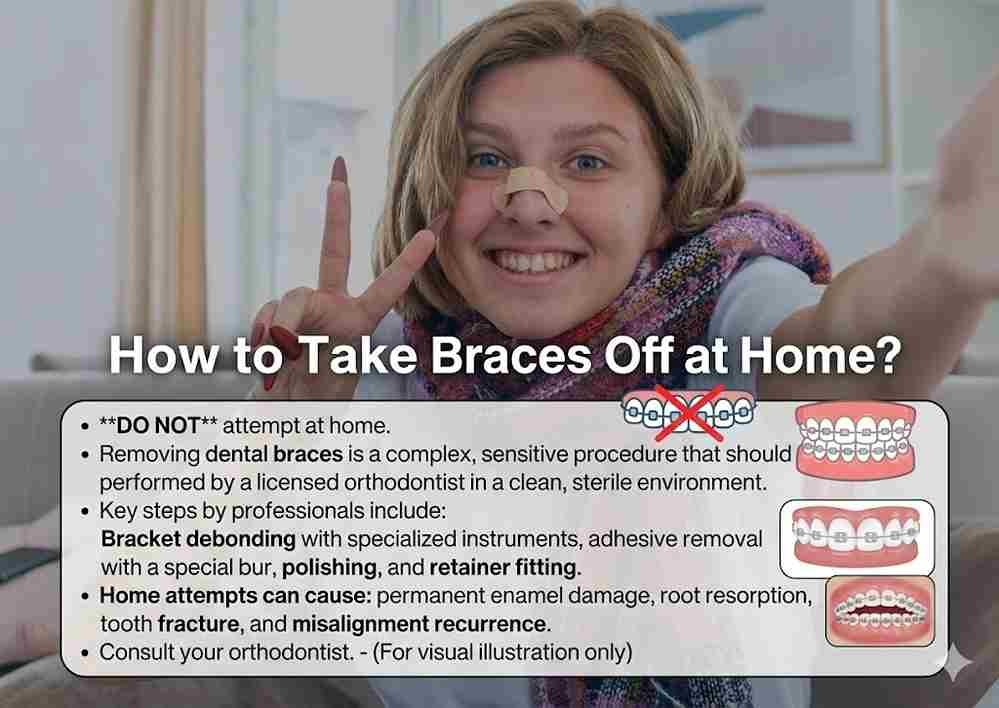
This article explores why attempting to remove braces at home is risky and highlights safer alternatives. It aims to inform readers about the professional process and explain why trusting experts is the best choice for preserving both dental health and a perfect smile.
Why People Consider Removing Braces at Home
Common Reasons for Wanting to Remove Braces at Home
People often consider removing their braces at home due to discomfort or persistent pain that isn’t relieved by usual methods. Financial constraints also play a big role—orthodontic care can be expensive, and some stop attending appointments for this reason. Additionally, many believe that removing braces is a simple process, fueled by DIY videos and tutorials online, leading to misconceptions about the ease and safety of home removal.
Risks of Leaving Braces On Too Long Without Adjustment
Leaving braces on longer than necessary or without proper adjustments can cause teeth to shift back to their original positions. This relapse not only wastes the progress made but can also cause gum irritation, plaque buildup, and increased risk of cavities, making oral hygiene more difficult and uncomfortable.
Why the Temptation is Growing
The internet’s vast collection of DIY content has made it easier than ever to find instructions for home braces removal. However, many of these sources simplify or overlook the risks, encouraging people to try it themselves without understanding the potential consequences.
The Dangers of Removing Braces at Home
Risk of Permanent Damage to Teeth
Improper removal techniques can severely damage your enamel, the protective outer layer of your teeth. Enamel damage can lead to sensitivity, decay, and the need for costly restorative dental work. Teeth can crack or chip if the brackets are pulled off incorrectly.
Gum and Oral Tissue Damage
Using household tools like pliers or screwdrivers to remove braces can cause cuts, bruises, or punctures in the gums. These injuries increase the risk of infection and may require medical intervention, complicating your dental health further.
Risk of Incomplete Removal
Brackets and wires may come off, but adhesive residue often remains on the teeth. Removing this glue requires specialized instruments and skills to avoid damaging the tooth surface, which is impossible to achieve safely at home.
Alignment Issues and Relapse
Removing braces prematurely can reverse the progress achieved during treatment. Without professional guidance, teeth may shift back to misaligned positions, negating months or years of orthodontic work and possibly requiring the entire process to start over.
Legal and Ethical Implications
Orthodontists are trained professionals who follow strict guidelines and ethics. Attempting to remove braces yourself bypasses this expertise and can lead to legal and ethical concerns, especially if complications arise.
Real-Life Examples
Numerous individuals have suffered dental damage from DIY attempts. For instance, one patient used pliers to remove brackets but ended up fracturing multiple teeth, resulting in expensive emergency dental treatments.
Alternatives to Removing Braces at Home
Contact Your Orthodontist
Your orthodontist is the best resource for safely removing braces. Even if you’ve missed appointments or stopped regular visits, they can work with you to schedule a removal appointment or discuss your concerns.
Seek Affordable or Low-Cost Orthodontic Care
If cost is a barrier, look into dental schools where supervised students provide orthodontic care at reduced rates. Nonprofit organizations and community clinics may also offer discounted services.
Explore Payment Plans
Many orthodontists offer flexible payment plans that make completing treatment more affordable. Don’t hesitate to ask about options to spread out the cost of removal and follow-up care.
Temporary Comfort Solutions
If discomfort motivates your desire to remove braces, try orthodontic wax to cover irritating brackets, or use over-the-counter pain relievers to manage soreness. These solutions can help you stay comfortable while waiting for professional removal.
Understanding the Professional Process of Removing Braces
Step 1: Evaluation of Teeth and Braces
Orthodontists first evaluate whether teeth are ready for brace removal. They check alignment, bite, and overall oral health to ensure treatment is complete.
Step 2: Safe Removal of Brackets and Wires
Using specialized dental tools, they carefully remove brackets and wires without harming the tooth enamel or soft tissues. This step requires precision and professional training.
Step 3: Cleaning and Polishing Teeth
After removal, adhesive residue is meticulously cleaned off, and teeth are polished to restore a smooth surface and prevent damage or plaque buildup.
Step 4: Taking Impressions for Retainers
Retainers are essential to maintaining teeth alignment post-braces. Orthodontists take impressions or digital scans to create custom retainers that fit perfectly.
Why These Steps Can’t Be Replicated at Home
The professional removal process demands specialized equipment and training to prevent damage and ensure lasting results. Attempting these steps at home is unsafe and often incomplete.
Why DIY Removal is a Bad Idea
Unreliable Information from Online Tutorials
Many online tutorials lack comprehensive safety instructions and are created by individuals without orthodontic training. Following these guides can lead to serious harm.
Common Tools People Use and Why They’re Dangerous
Pliers, dental floss, and screwdrivers are often used in DIY attempts but can cause chipped teeth, gum lacerations, and infections when misused.
Hidden Costs of DIY Removal
Although DIY removal might save money upfront, resulting damage often leads to expensive corrective treatments, including fillings, crowns, or orthodontic re-treatment.
Psychological Impulse vs. Logical Decision
Frustration with braces can push people toward impulsive decisions. However, a logical, informed approach prioritizes long-term oral health over short-term discomfort relief.
What to Do If You’ve Already Attempted DIY Removal
Seek Immediate Help from a Professional
If you have tried to remove braces yourself, immediately consult an orthodontist or dentist. Prompt professional care can minimize damage and guide appropriate treatment.
Assess and Manage Damage
Avoid further removal attempts and care for any injuries by rinsing with warm saltwater and avoiding hard foods until you can see a professional.
Be Honest with Your Orthodontist
Transparency about your DIY attempts helps your orthodontist understand the situation fully and plan the best course of action.
Address Emotional Concerns
Feeling embarrassed is natural, but remember that dental professionals are nonjudgmental and focused on helping you heal and complete your treatment successfully.
Prevention Tips: How to Avoid Wanting to Remove Braces at Home

Proper Oral Hygiene
Maintaining excellent oral hygiene reduces irritation and discomfort. Brush and floss carefully around brackets to keep teeth and gums healthy.
Managing Pain or Discomfort
Use orthodontic wax on problematic brackets, adjust your diet to softer foods, and take pain relievers as needed to ease discomfort.
Communication with Your Orthodontist
Regular communication ensures that any pain or issues are addressed quickly, decreasing the urge to consider unsafe removal.
Motivational Tips to Stay Committed to Treatment
Focus on the end goal—a healthy, beautiful smile. Keeping this in mind can help maintain your patience and commitment to completing treatment properly.
Conclusion
While it may be tempting to figure out how to take braces off at home, the risks far outweigh the benefits. From permanent dental damage to infections and costly corrective treatments, DIY removal is unsafe and unadvisable.
Instead, seek professional orthodontic care to ensure your braces are removed safely and your smile remains healthy. Explore affordable options and maintain communication with your orthodontist to navigate any challenges during treatment. Your smile deserves the best care.
