

Introduction
Imagine waking up on a freezing winter morning only to discover that no water is coming out of your faucets. Frozen pipes are a common issue in mobile homes, especially during harsh winters. This problem can be stressful, inconvenient, and even damaging if not addressed promptly.
Mobile homes are especially prone to frozen pipes due to their unique construction, including less insulation and exposed plumbing under the home. Ignoring frozen pipes can lead to serious consequences, such as pipes bursting and causing costly water damage. Fortunately, learning how to unfreeze pipes in a mobile home can save you time, money, and frustration. This guide will walk you through the process step by step so you can safely restore water flow and protect your home from damage.
Why Do Pipes Freeze in Mobile Homes?
Factors That Make Mobile Homes More Prone to Frozen Pipes
Mobile homes are at a greater risk of experiencing frozen pipes compared to traditional houses. Several factors contribute to this:
- Lack of insulation: Many mobile homes have less insulation around their pipes, making them more vulnerable to freezing temperatures.
- Exposed plumbing: Pipes under mobile homes are often directly exposed to the cold air, especially if the home’s skirting is not properly sealed.
- Poor heating and ventilation: Mobile homes tend to lose heat more quickly, which can leave pipes in unheated areas susceptible to freezing.
The Science of Pipe Freezing
When temperatures drop below freezing, the water inside pipes can turn to ice. As the water freezes, it expands, creating pressure within the pipe. If the pressure becomes too great, it can cause the pipe to crack or burst. This is why it’s crucial to address frozen pipes as soon as possible.
Why Immediate Action is Important
Frozen pipes not only disrupt your water supply but also pose a risk of severe water damage if the pipes burst. Acting quickly to unfreeze the pipes can prevent costly repairs and ensure your water system functions properly.
Signs Your Pipes Are Frozen
Common Indicators of Frozen Pipes
It’s important to recognize the signs of frozen pipes early so you can address the issue promptly. Here are some common indicators:
- No water flow or reduced water pressure: If you turn on a faucet and no water comes out, or the flow is weaker than usual, it could be a sign of a frozen pipe.
- Frost or ice on exposed pipes: Visible frost on pipes, especially those under your mobile home or near exterior walls, is a clear sign they may be frozen.
- Unusual sounds: You may hear gurgling, cracking, or banging noises when turning on a faucet, which could indicate ice blockages in the pipes.
- Odd odors from drains: Frozen water can block the flow of waste, causing unusual smells to come from your drains.
Tips for Confirming Frozen Pipes Safely
If you suspect a pipe is frozen, carefully inspect the areas where pipes are visible, such as under sinks or along exterior walls. Touch the pipes to check for extreme cold spots, but avoid applying too much pressure as frozen pipes can be fragile.
Tools and Materials Needed to Unfreeze Pipes in a Mobile Home
Essential Tools and Materials
To safely and effectively unfreeze pipes in your mobile home, gather the following tools and materials:
- Hairdryer or heat gun: These tools provide controlled heat to thaw frozen pipes.
- Space heater: Helps to warm the surrounding area and speed up the thawing process.
- Heating pads or warm towels: Can be wrapped around pipes to gently apply heat.
- Pipe insulation or foam: For insulating pipes after they’re thawed.
- Bucket: To catch dripping water as the ice melts.
Optional Tools for Enhanced Efficiency
- Infrared thermometer: Useful for identifying the exact location of frozen areas in pipes.
- Pipe thawing machine: A professional-grade tool used to quickly thaw pipes (available for rent).
Safety Gear
- Gloves: Protect your hands from cold metal and potential leaks.
- Goggles: Shield your eyes from any splashes.
- Protective clothing: Wear warm and water-resistant clothing when working in cold conditions.
Where to Buy Supplies
You can find these tools and materials at hardware stores, home improvement retailers, or online. Be sure to choose high-quality products for the best results.
Step-by-Step Guide: How to Unfreeze Pipes in a Mobile Home
Step 1: Locate the Frozen Pipe
Begin by identifying which pipe is frozen.
- Check under the mobile home, especially around exposed pipes.
- Inspect vulnerable areas like pipes under sinks, near exterior walls, or in unheated corners of the home.
- Use an infrared thermometer to pinpoint the frozen section if available.
Step 2: Turn Off the Water Supply
Before you start thawing, turn off the main water valve to prevent leaks or bursts.
- Locate the main water valve in your mobile home, typically found near the water meter or under the skirting.
- Turning off the water ensures that any cracks caused by freezing won’t result in major flooding.
Step 3: Open Faucets to Relieve Pressure
Open the faucets connected to the frozen pipe to release pressure and allow melting ice to flow out.
- Start with the faucet closest to the frozen section.
- Leave the faucets open throughout the thawing process to help water move through the pipes.
Step 4: Safely Apply Heat to the Frozen Pipe
There are several safe methods for applying heat to thaw frozen pipes:
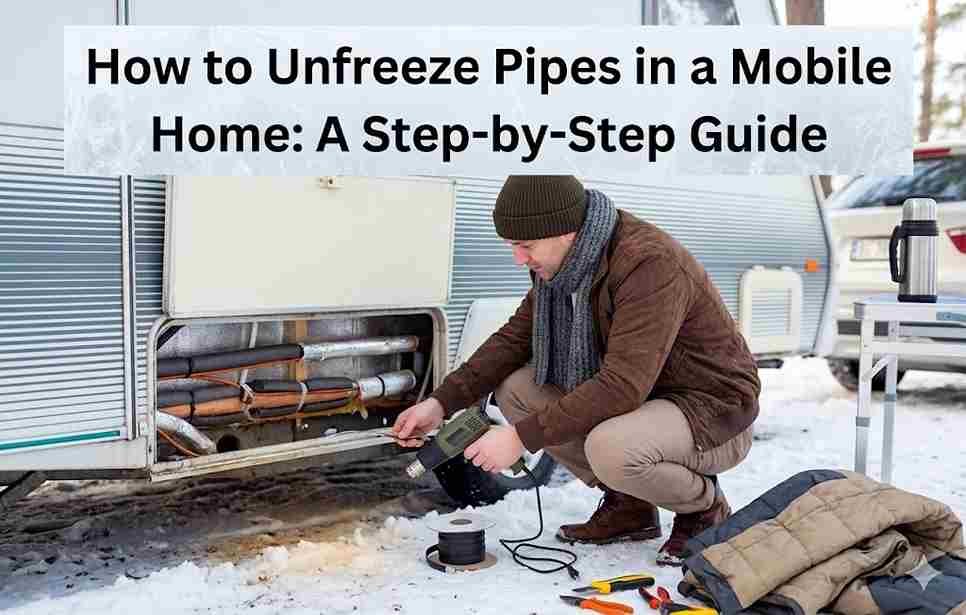
- Hairdryer or heat gun: Use these tools to direct warm air along the length of the frozen pipe. Keep the device moving to avoid overheating one spot.
- Warm towels: Soak towels in warm water, wring them out, and wrap them around the pipe. Repeat as needed.
- Space heater: Place a space heater near the frozen pipe to warm the surrounding area.
Step 5: Monitor the Thawing Process
As the ice begins to melt, water should start dripping from the open faucets.
- Use a bucket to catch the water and prevent it from pooling.
- Be patient and avoid rushing the process, as applying too much heat too quickly can damage the pipes.
Step 6: Inspect for Leaks Once Pipes Are Thawed
After the pipes are thawed, check for cracks or leaks that may have formed during freezing.
- Use pipe tape or clamps for temporary fixes on minor leaks.
- For significant damage, you may need to call a professional plumber.
Step 7: Restore Water Supply
Once you’re confident there are no leaks, gradually turn the main water valve back on.
- Check all faucets and pipes to ensure proper water flow.
- Monitor the area for any signs of new leaks.
Preventative Measures to Avoid Frozen Pipes in the Future

How to Insulate Pipes in a Mobile Home
- Install foam pipe insulation or heat tape around exposed pipes.
- Seal gaps in the home’s skirting to protect pipes from cold air.
Maintain Proper Heating
- Keep your thermostat set to a consistent temperature, even when you’re away.
- Use space heaters in areas prone to freezing to maintain warmth.
Winterize Your Mobile Home
- Seal cracks and gaps in skirting and exterior walls.
- Let faucets drip during extremely cold weather to prevent freezing.
Common Mistakes to Avoid When Thawing Frozen Pipes
- Using open flames: Never use a blowtorch or other open flame, as this poses a serious fire hazard.
- Applying too much heat too quickly: Rapid heating can cause pipes to crack.
- Ignoring minor leaks: Even small leaks can cause significant damage over time.
- Skipping the water shut-off step: Always turn off the water supply before starting.
When to Call a Professional Plumber
Signs You Need Professional Help
- Pipes remain frozen despite your efforts.
- Visible cracks or bursts in pipes.
- Persistent leaks that temporary fixes can’t resolve.
Finding a Reputable Plumber
Search for licensed plumbers with experience in mobile home plumbing. Check online reviews and ask for recommendations from friends or neighbors.
Frequently Asked Questions (FAQs)
How Long Does It Take to Thaw Frozen Pipes?
The thawing process can take anywhere from 30 minutes to a few hours, depending on the severity of the freeze.
Can I Prevent Frozen Pipes Without Insulating Them?
While insulation is the best solution, keeping faucets dripping and maintaining consistent indoor heating can help reduce the risk.
What Happens If I Ignore Frozen Pipes?
Ignoring frozen pipes can lead to bursts, flooding, and costly repairs.
Should I Let All Faucets Drip in Freezing Weather?
Yes, letting faucets drip can help relieve pressure and prevent freezing.
Conclusion
Knowing how to unfreeze pipes in a mobile home is an essential skill for any mobile homeowner. Frozen pipes can be a stressful issue, but with the right tools, techniques, and preventative measures, you can handle the situation safely and effectively. By acting quickly and following this guide, you can protect your home from costly water damage and ensure your plumbing system stays in good shape throughout the winter. Have tips or questions? Share them in the comments below!
