

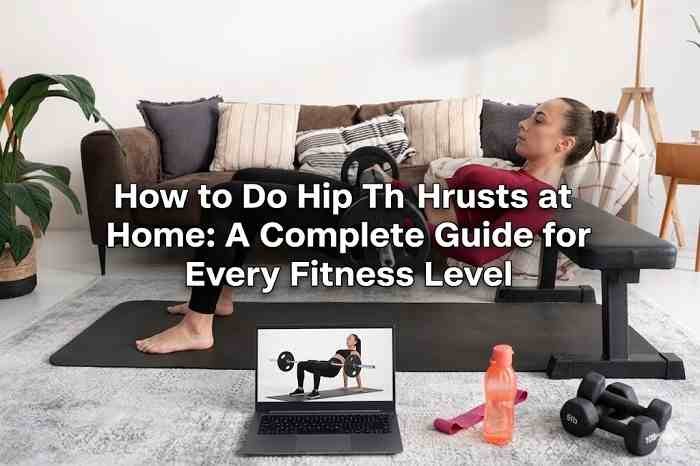
Did you know that strong glutes are not just important for aesthetics but also for overall fitness and injury prevention? Glute strength plays a vital role in athletic performance, posture, and even daily activities like walking or climbing stairs. One of the best exercises to target and strengthen your glutes is the hip thrust. While this exercise is often associated with gyms, you can easily learn how to do hip thrusts at home with minimal equipment and space. Whether you’re a beginner or a fitness enthusiast, this guide will teach you the benefits, techniques, variations, and safety tips for mastering hip thrusts from the comfort of your home.
What Are Hip Thrusts?
Definition and Overview
Hip thrusts are a strength-training exercise that primarily targets the gluteal muscles. Unlike squats or deadlifts, which engage multiple muscle groups, hip thrusts isolate the glutes, making them highly effective for building strength and size in that area. Fitness enthusiasts and athletes alike favor this exercise for its ability to enhance both performance and aesthetics.
Muscles Worked During Hip Thrusts
- Primary Muscles: Gluteus maximus, gluteus medius, and gluteus minimus.
- Secondary Muscles: Hamstrings, quadriceps, and core.
By strengthening these muscle groups, hip thrusts contribute to improved stability, posture, and athletic capabilities.
Why Hip Thrusts Are Important
- Athletic Performance: Strong glutes improve your ability to run faster, jump higher, and lift heavier.
- Aesthetic Benefits: Hip thrusts are perfect for shaping and toning your glutes.
- Injury Prevention: They support your lower back and knees by improving overall stability.
- Enhanced Posture: By strengthening the pelvis and core, hip thrusts can prevent slouching.
Benefits of Doing Hip Thrusts at Home
Convenience and Flexibility
Performing hip thrusts at home eliminates the need for a gym membership. You can work out anytime, whether it’s early morning or late evening, and tailor the exercise to your fitness level.
Cost-Effectiveness
Hip thrusts require little to no equipment, which means you can save money on gym fees and expensive machines. Plus, household items can often serve as substitutes for fitness gear.
Privacy
For those who feel self-conscious working out in public, doing hip thrusts at home provides a private space to focus on improving your form and performance.
Customizable Intensity
At-home hip thrusts can be scaled to match your fitness level. Start with bodyweight exercises and gradually progress to weighted variations as you build strength.
Equipment Needed to Do Hip Thrusts at Home
Basic Equipment
- Flat Surface: Use a bench, couch, or sturdy chair for support.
- Yoga Mat: Provides comfort and prevents slipping during floor exercises.
- Resistance Bands: Add intensity by placing them around your thighs.
Optional Equipment
- Dumbbells, Kettlebells, or Weighted Plates: For those looking to increase resistance.
- Barbell with Padding: Ideal for advanced weighted hip thrusts.
- Stability Ball: Adds a balance challenge for core engagement.
Household Alternatives
- Use a sturdy chair or ottoman in place of a gym bench.
- Fill a backpack with books or water bottles as a makeshift weight.
- Wrap a towel around a broomstick to mimic a barbell.
Step-by-Step Guide: How to Do Hip Thrusts at Home
Step 1: Set Up Your Workspace
Choose a stable, elevated surface like a chair or couch. Place a yoga mat on the floor for added support. Ensure your workout area is free of clutter to avoid accidents.
Step 2: Position Yourself Correctly
Sit on the floor with your back against the edge of the elevated surface. Bend your knees so your feet are flat on the ground, roughly hip-width apart. Rest your upper back and shoulder blades against the surface.
Step 3: Perform the Hip Thrust
Drive through your heels to lift your hips toward the ceiling. Squeeze your glutes at the top, ensuring your body forms a straight line from your shoulders to your knees. Slowly lower your hips back to the starting position.
Step 4: Focus on Proper Form
Keep your chin tucked and gaze forward throughout the movement. Avoid arching your lower back and ensure the motion is controlled rather than relying on momentum.
Variations of Hip Thrusts at Home
Bodyweight Hip Thrusts
These are perfect for beginners to focus on mastering form. No equipment is required, making them accessible for anyone.
Resistance Band Hip Thrusts
Place a resistance band above your knees to increase glute activation. Choose a band strength that challenges you without compromising form.
Weighted Hip Thrusts
Incorporate dumbbells, kettlebells, or a barbell to add intensity. Position the weight across your hips, and use a padded surface to minimize discomfort.
Single-Leg Hip Thrusts
This advanced variation targets each glute individually, improving balance and addressing muscle imbalances. Keep one leg extended while performing the thrust with the other.
Stability Ball Hip Thrusts
Use a stability ball for added instability, which engages your core muscles. Beginners should practice with caution and ensure the ball is secure.
Common Mistakes to Avoid When Doing Hip Thrusts at Home
Improper Form
- Avoid overarching your lower back; maintain a neutral spine.
- Prevent your knees from caving inward by keeping them aligned with your toes.
Rushing Through Reps
Performing slow, controlled movements enhances the mind-muscle connection and maximizes glute engagement.
Neglecting Setup and Equipment Safety
Always ensure your surface is stable and can support your weight. Test your equipment beforehand to avoid accidents.
Skipping Warm-Up and Cool-Down
Warm up with exercises like glute bridges or bodyweight squats to activate your muscles. Cool down with stretches to prevent soreness and promote recovery.
How to Progress and Maximize Results
Progressive Overload
Gradually increase the resistance or weight used in your hip thrusts. This ensures you’re continually challenging your muscles and making progress.
Adding More Reps or Sets
Start with 8-10 reps for 2-3 sets and increase volume as you build strength.
Incorporating Hip Thrusts Into a Workout Routine
Pair hip thrusts with other glute-focused exercises like squats, lunges, and step-ups for a comprehensive lower body workout.
Adjusting Tempo
Slow down the eccentric (lowering) phase of the movement to increase time under tension. Adding a pause at the top also enhances glute activation.
Safety Tips for Doing Hip Thrusts at Home
Warm-Up and Stretching
Include dynamic stretches like donkey kicks and fire hydrants to prepare your glutes and hamstrings.
Equipment Safety
Ensure your elevated surface is stable and padded if necessary. Always double-check the weight or resistance used to avoid injuries.
Listening to Your Body
If you experience pain or discomfort, reassess your form and reduce intensity. Rest when needed to prevent overtraining.
Maintaining Proper Form
Use a mirror or record yourself to monitor your alignment and technique. Proper form ensures effectiveness and reduces the risk of injury.
Benefits of Strong Glutes Beyond Aesthetics
Improved Athletic Performance
Strong glutes power movements like sprinting, jumping, and heavy lifting.
Reduced Risk of Lower Back Pain
By stabilizing the pelvis and spine, strong glutes alleviate pressure on the lower back.
Enhanced Posture
Glutes play a key role in maintaining a neutral pelvic position, preventing slouching.
Better Balance and Stability
Strong glutes improve overall functional fitness, reducing the risk of falls or injuries.
Frequently Asked Questions
Can beginners do hip thrusts at home without equipment?
Yes, bodyweight hip thrusts are ideal for beginners to practice proper form.
How many times a week should I do hip thrusts for the best results?
Aim for 2-3 sessions per week, allowing time for muscle recovery.
What’s the difference between hip thrusts and glute bridges?
Hip thrusts use an elevated surface, providing a greater range of motion and increased glute activation compared to glute bridges.
How long does it take to see results from hip thrusts?
With consistent effort, noticeable improvements in strength and glute shape can appear within 6-8 weeks.
Can I do hip thrusts every day?
While it’s possible, it’s best to allow rest days for recovery and muscle growth.
What should I do if I feel pain in my lower back during the exercise?
Reassess your form and ensure you’re engaging your glutes rather than overusing your lower back.
Key Takeaways
- Hip thrusts are a powerful exercise for building glute strength and improving overall fitness.
- They can easily be done at home using minimal equipment or household items.
- Proper form, progressive overload, and consistency are crucial for maximizing results.
- Always prioritize safety by warming up, using stable equipment, and listening to your body.
Conclusion
Mastering how to do hip thrusts at home can transform your fitness journey by strengthening your glutes, enhancing athletic## How to Do Hip Thrusts at Home: Complete Guide
Have you ever wondered how to build stronger, more defined glutes without spending money on a gym membership? Hip thrusts are one of the most effective exercises for activating and strengthening your glute muscles, and the best part is that you can learn how to do hip thrusts at home with minimal equipment. Whether you’re a fitness beginner or someone looking to enhance your workout routine, understanding how to do hip thrusts at home can transform your lower body strength and appearance. This comprehensive guide will walk you through everything you need to know about performing hip thrusts at home, from proper form and equipment to common mistakes and progression strategies.
What Are Hip Thrusts?
Definition and Overview
Hip thrusts are a strength-training exercise that primarily targets the glute muscles. Unlike squats or deadlifts, which involve multiple joints and movements, hip thrusts isolate the glutes through a specific hip extension motion. The exercise has gained tremendous popularity among fitness enthusiasts, athletes, and people interested in building a stronger posterior chain. When you learn how to do hip thrusts at home, you’re essentially mastering one of the most effective glute-focused movements available.
Muscles Worked During Hip Thrusts
The primary muscles engaged during hip thrusts are the three gluteal muscles: the gluteus maximus, gluteus medius, and gluteus minimus. These muscles work together to extend your hips and create the powerful thrust motion. Secondary muscles that assist in the movement include the hamstrings, quadriceps, and core muscles. Understanding which muscles are working helps you maintain proper form and maximize the effectiveness of your workout.
Why Hip Thrusts Are Important
Strong glutes provide numerous benefits beyond just aesthetic appeal. They improve your athletic performance by enhancing your ability to run faster, jump higher, and lift heavier weights. Strong glutes also support your lower back, reducing the risk of injury during daily activities and exercise. Additionally, well-developed glutes improve your posture by properly stabilizing your pelvis, preventing the slouching that comes from weak glute muscles. This is why learning how to do hip thrusts at home is an investment in your overall health and fitness.
Benefits of Doing Hip Thrusts at Home
Convenience and Flexibility
One of the most appealing aspects of learning how to do hip thrusts at home is the convenience factor. You don’t need a gym membership or fancy equipment to perform this exercise effectively. You can work out on your own schedule, whether that’s early morning before work or late at night after the kids go to bed. This flexibility makes it easier to maintain consistency with your fitness routine, which is crucial for seeing results.
Cost-Effectiveness
Performing hip thrusts at home eliminates the expense of gym memberships and personal trainers. You can create an effective home workout environment with items you already have around your house. This makes fitness more accessible to everyone, regardless of their budget. Learning how to do hip thrusts at home means you can achieve your fitness goals without breaking the bank.
Privacy and Focus
Many people feel self-conscious working out in a crowded gym environment. At home, you have complete privacy to focus on your form and technique without worrying about others watching. This mental comfort can actually improve your workout quality, allowing you to concentrate on the mind-muscle connection and proper movement patterns. When you practice how to do hip thrusts at home, you can really dial in your technique.
Customizable Intensity
Working out at home allows you to easily scale the intensity of your hip thrusts based on your current fitness level. You can start with bodyweight movements and gradually progress to using resistance bands, dumbbells, or other weighted objects. This progressive approach helps you build strength safely while reducing the risk of injury.
Equipment Needed to Do Hip Thrusts at Home
Basic Equipment
To get started with hip thrusts at home, you need a stable, elevated surface to support your upper back. This could be a sturdy bench, a firm couch, a bed, or even a low table. You’ll also want a yoga mat or towel to place on the floor for comfort during the exercise. A yoga mat provides cushioning for your legs and helps prevent slipping during your workout. These basic items are often already available in most homes, making it incredibly easy to start learning how to do hip thrusts at home.
Optional Equipment
As you progress and want to increase the intensity of your hip thrusts at home, you might add resistance bands, dumbbells, kettlebells, or weighted plates. A barbell with padding can also be used for more advanced practitioners. Some people even use a stability ball to add an additional challenge to the movement. These items aren’t necessary to get started, but they become useful as you advance.
Household Alternatives
If you don’t have traditional fitness equipment, you can absolutely still learn how to do hip thrusts at home using creative alternatives. A sturdy chair or ottoman works great as an elevated surface. You can fill a backpack with books to use as a weight, or use water jugs as dumbbells. A rolled-up towel can serve as padding for a barbell. The key is finding items that are stable, safe, and provide the resistance you need.
Step-by-Step Guide: How to Do Hip Thrusts at Home
Step 1: Set Up Your Workspace
Before you begin, find a clear area in your home where you have enough space to move comfortably. Choose a sturdy, elevated surface that can support your body weight without wobbling. Place your yoga mat on the floor in front of this surface. Make sure the area is free from obstacles, sharp corners, or anything that could pose a safety hazard. Taking time to set up properly is essential when learning how to do hip thrusts at home.
Step 2: Position Yourself Correctly
Sit on the floor with your back against the elevated surface. Your upper back, specifically your shoulder blades, should be resting on the edge of the bench or couch. Bend your knees so your feet are flat on the floor, positioned about hip-width apart. Your feet should be roughly a foot away from your buttocks. Your arms can rest at your sides or across your chest. This starting position is crucial for proper form when you do hip thrusts at home.
Step 3: Perform the Hip Thrust
From this starting position, drive through your heels to lift your hips toward the ceiling. As you push upward, squeeze your glute muscles tightly at the top of the movement. Your body should form a straight line from your knees to your shoulders at the peak of the thrust. Hold this position for a moment, maintaining the glute contraction. Then, slowly lower your hips back down to the starting position in a controlled manner. This controlled movement is what makes learning how to do hip thrusts at home so effective.
Step 4: Focus on Proper Form
Throughout the movement, keep your chin tucked and your gaze directed forward, not upward. Maintain a neutral spine by avoiding excessive arching in your lower back. Your core should be engaged throughout the exercise to support your spine. Don’t use momentum to complete the movement; instead, rely on your glute muscles to drive the motion. Proper form is absolutely critical when you do hip thrusts at home, as it ensures you’re targeting the right muscles and reducing injury risk.
Variations of Hip Thrusts at Home
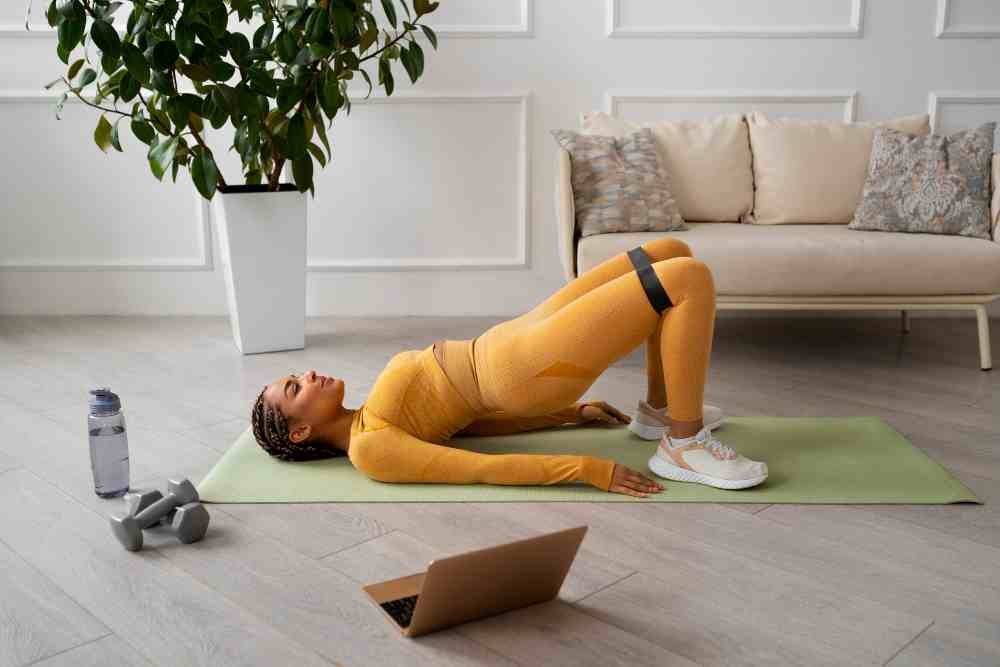
Bodyweight Hip Thrusts
The most basic version of hip thrusts requires no equipment at all, making it perfect for beginners. Bodyweight hip thrusts allow you to master the movement pattern and build a foundation of strength before adding resistance. Many people find that bodyweight hip thrusts alone provide a significant challenge, especially when performed with controlled tempo and high repetitions. This is an excellent starting point for anyone learning how to do hip thrusts at home.
Resistance Band Hip Thrusts
Adding a resistance band above your knees creates additional glute activation by preventing your knees from caving inward. The band adds constant tension throughout the movement, making the exercise more challenging. When selecting a resistance band, choose one with appropriate tension for your fitness level. Lighter bands work well for beginners, while stronger bands suit more advanced practitioners. This variation is a great way to progress once you’ve mastered bodyweight hip thrusts at home.
Weighted Hip Thrusts
Once you’re comfortable with bodyweight and banded variations, you can add external weight to increase intensity. Dumbbells, kettlebells, or a barbell can be placed across your hips. Start with lighter weights and focus on maintaining proper form. The weight should rest comfortably on your hip bones without rolling or shifting during the movement. This progression is a natural next step when learning how to do hip thrusts at home with added challenge.
Single-Leg Hip Thrusts
This advanced variation involves performing hip thrusts with one leg at a time, which requires greater balance and glute engagement. Start by keeping one foot on the ground while lifting the other leg slightly off the floor. This variation is significantly more challenging and should only be attempted after mastering the standard version. Single-leg hip thrusts are excellent for identifying and correcting strength imbalances between sides.
Stability Ball Hip Thrusts
Using a stability ball instead of a bench adds an element of instability, which requires your core to work harder for balance. This variation is more challenging and should only be attempted by intermediate to advanced practitioners. The instability forces your stabilizer muscles to engage more intensely, providing a unique challenge when you do hip thrusts at home.
Common Mistakes to Avoid When Doing Hip Thrusts at Home
Improper Form
One of the most common mistakes people make when learning how to do hip thrusts at home is overarching their lower back. While some back extension is normal, excessive arching can strain your spine and reduce glute activation. Instead, focus on maintaining a neutral spine throughout the movement. Another form mistake is allowing your knees to cave inward toward the center of your body. Your knees should stay aligned with your ankles and hips throughout the entire movement. These alignment issues can reduce effectiveness and increase injury risk.
Rushing Through Reps
Many people perform hip thrusts too quickly, using momentum rather than muscle power to complete the movement. This reduces the effectiveness of the exercise and increases injury risk. Instead, move slowly and deliberately through each repetition. The eccentric phase (lowering) should take about two to three seconds, and the concentric phase (lifting) should also be controlled. Slow, controlled movements allow for better mind-muscle connection and greater glute activation.
Neglecting Setup and Equipment Safety
Using unstable surfaces like wobbly chairs or old furniture can lead to accidents and injuries. Always test the stability of your equipment before beginning your workout. Make sure the surface can comfortably support your body weight without shifting or tilting. Using improper equipment or an unstable setup undermines all the benefits you could gain from learning how to do hip thrusts at home safely.
Skipping Warm-Up and Cool-Down
Many people jump straight into hip thrusts without warming up their muscles first. A proper warm-up prepares your body for exercise and reduces injury risk. Simple warm-up exercises like glute bridges, donkey kicks, or bodyweight squats can activate your muscles and increase blood flow. Similarly, stretching after your workout helps reduce soreness and improve recovery. These preparatory steps are essential components of a complete hip thrust routine at home.
How to Progress and Maximize Results
Progressive Overload
Progressive overload is the key to continuous improvement and results. This means gradually increasing the challenge of your workouts over time. You can increase the weight you’re using, add more repetitions or sets, or try more challenging variations. Tracking your progress helps you identify when it’s time to increase the difficulty. Many people find that documenting their workouts helps them stay motivated and consistent with their training.
Adding More Reps or Sets
If you’re starting with bodyweight hip thrusts, you might begin with three sets of ten to fifteen repetitions. As you get stronger, you can increase the number of reps or sets. Beginners might progress from ten reps to fifteen reps over several weeks. Intermediate practitioners might perform three to four sets of twelve to twenty reps, while advanced athletes might do four to five sets of twenty-plus reps with added weight. This gradual progression prevents plateaus and keeps your muscles challenged.
Incorporating Hip Thrusts Into a Workout Routine
Hip thrusts work best when combined with other glute and lower body exercises. You might pair hip thrusts with squats, lunges, leg presses, or deadlifts to create a comprehensive lower body workout. A sample routine might include a warm-up, followed by hip thrusts, then squats, then leg curls, and finally stretching. Performing hip thrusts at home as part of a structured routine helps you see better results than doing them in isolation.
Adjusting Tempo
Changing the speed at which you perform hip thrusts can significantly impact their effectiveness. Slowing down the lowering phase to three to four seconds increases time under tension and muscle damage, leading to greater growth. Adding pauses at the top of the movement, holding for one to two seconds while squeezing your glutes, also increases difficulty and activation. These tempo variations keep your muscles challenged and prevent adaptation.
Safety Tips for Doing Hip Thrusts at Home
Warm-Up and Stretching
Before performing hip thrusts at home, spend five to ten minutes warming up your glutes, hamstrings, and core. Dynamic stretches like leg swings, bodyweight squats, or glute bridges prepare your muscles for exercise. After your workout, spend another five to ten minutes stretching to improve flexibility and reduce soreness. Proper warm-up and cool-down routines are essential for injury prevention and recovery.
Equipment Safety
Always inspect your equipment before use to ensure it’s sturdy and stable. Test the bench or chair by applying pressure before you begin your workout. Make sure any weights you’re using are secure and won’t shift during the movement. Using improper or unstable equipment is one of the most common causes of injury when people do hip thrusts at home. Taking a few extra seconds to verify equipment safety can prevent serious accidents.
Listening to Your Body
Pay attention to how your body feels during and after your workouts. Sharp pain, especially in your lower back or knees, is a sign that something is wrong. Mild muscle soreness is normal after a challenging workout, but pain is not. If you experience persistent discomfort, reduce the intensity of your hip thrusts at home or take a few days off to recover. Knowing when to scale back is just as important as knowing when to push harder.
Maintaining Proper Form
Using a mirror to check your form is incredibly helpful when learning how to do hip thrusts at home. You can see whether your hips are moving in a straight line, whether your knees are staying aligned, and whether you’re maintaining a neutral spine. Recording yourself on your phone is another excellent way to analyze your form. Focusing on quality over quantity ensures you’re getting the most benefit from each repetition.
Benefits of Strong Glutes Beyond Aesthetics
Improved Athletic Performance
Strong glutes are essential for athletic performance in virtually every sport. They contribute to faster sprinting speeds, higher vertical jumps, and greater power in lifting movements. Athletes who prioritize glute strength often see improvements in their overall performance and reduced injury rates. This is why learning how to do hip thrusts at home is beneficial not just for aesthetics but for functional athletic ability.
Reduced Risk of Lower Back Pain
Weak glutes often lead to lower back pain because the back muscles have to compensate for the lack of glute strength. Strong glutes properly stabilize your pelvis and spine during daily activities, reducing stress on your lower back. Many people who suffer from chronic lower back pain find relief after strengthening their glutes through exercises like hip thrusts performed at home.
Enhanced Posture
Your glutes play a crucial role in maintaining proper posture. Strong glutes help keep your pelvis in the correct position, which prevents the forward tilt that leads to slouching and poor posture. Better posture not only looks more confident and professional but also reduces strain on your neck, shoulders, and lower back. This postural improvement is one of the often-overlooked benefits of learning how to do hip thrusts at home.
Better Balance and Stability
Strong glutes improve your overall balance and stability during daily activities and exercise. This is especially important as you age, as balance becomes increasingly important for preventing falls and maintaining independence. The glutes are foundational muscles for functional fitness, making hip thrusts at home a valuable exercise for long-term health.
Frequently Asked Questions
Can beginners do hip thrusts at home without equipment?
Absolutely. Beginners can start with bodyweight hip thrusts at home and see excellent results. Bodyweight alone provides sufficient resistance to build strength and develop proper form before progressing to weighted variations.
How many times a week should I do hip thrusts for the best results?
Most people see good results performing hip thrusts two to three times per week. This frequency allows adequate recovery between sessions while providing enough stimulus for muscle growth and strength development.
What’s the difference between hip thrusts and glute bridges?
Hip thrusts and glute bridges are similar movements, but hip thrusts use an elevated surface for the upper back, which allows for greater range of motion and glute activation. Glute bridges are performed with the upper back on the floor, making them slightly less intense.
How long does it take to see results from hip thrusts?
Most people notice improvements in strength within two to three weeks. Visible changes in muscle development typically appear after four to six weeks of consistent training, depending on diet and overall fitness level.
Can I do hip thrusts every day?
While it’s technically possible to perform hip thrusts daily, most fitness experts recommend allowing at least one rest day between sessions for proper recovery. Overtraining can lead to fatigue and increased injury risk.
What should I do if I feel pain in my lower back during the exercise?
Stop immediately and assess your form. Pain in the lower back often indicates excessive arching or improper form. Reduce the intensity and focus on maintaining a neutral spine. If pain persists, consult a healthcare professional.
Key Takeaways
Learning how to do hip thrusts at home is an effective, convenient, and affordable way to build stronger glutes and improve your overall fitness. The exercise requires minimal equipment and can be easily modified for any fitness level. Proper form, consistent training, and progressive overload are essential for seeing results. Strong glutes provide benefits far beyond aesthetics, including improved posture, reduced injury risk, and enhanced athletic performance. Whether you’re a fitness beginner or an experienced athlete, incorporating hip thrusts into your home workout routine is a smart investment in your health and fitness.
Conclusion
Hip thrusts are one of the most effective exercises for building strong, defined glutes, and the beauty of learning how to do hip thrusts at home is that you can achieve excellent results without expensive gym equipment or memberships. From setting up your workspace to mastering proper form and progressing to advanced variations, this guide provides everything you need to get started. Remember that consistency is more important than perfection. Start with bodyweight hip thrusts at home, focus on maintaining proper form, and gradually increase the intensity as you get stronger. The investment you make in learning how to do hip thrusts at home will pay dividends in improved strength, better posture, enhanced athletic performance, and greater confidence in your physical abilities. So grab a sturdy bench or couch, lay down your yoga mat, and start building those glutes today.
