

Introduction
Have you ever found yourself constantly wiping your eyes, frustrated by the persistent tearing that interrupts your day? Watery eyes can be a nuisance, making it difficult to focus on daily tasks or enjoy simple activities. Whether caused by allergies, irritants, or environmental factors, watery eyes can affect anyone at any time. Understanding how to stop watery eyes at home can provide quick relief and prevent the problem from escalating.
This blog post will explore the common causes of watery eyes and offer practical remedies you can try at home. From simple lifestyle adjustments to natural solutions, you’ll discover safe and effective ways to manage this condition and maintain optimal eye health.
What Causes Watery Eyes?
Allergies and Irritants
One of the most common reasons for watery eyes is allergies. Allergens like pollen, dust, and pet dander can irritate the eyes, prompting an overproduction of tears as the body’s defense mechanism. Similarly, irritants such as smoke, strong odors, or pollution can trigger this response.
Dry Eyes and Paradoxical Tearing
It may seem counterintuitive, but dry eyes can actually cause excessive tearing. When the eyes are too dry, they compensate by producing more tears, leading to watery eyes. This condition, known as reflex tearing, is a common cause of discomfort.
Eye Strain and Screen Time
Spending long hours in front of a screen can strain your eyes and disrupt their natural moisture balance. Blue light exposure, reduced blinking, and prolonged focus all contribute to eye strain, which can result in watery eyes.
Infections and Medical Conditions
Infections like conjunctivitis (pink eye) or eyelid inflammation (blepharitis) can cause watery eyes as part of the body’s natural response to fight off bacteria or viruses. Additionally, blocked tear ducts or underlying medical conditions may lead to excessive tearing.
Environmental Factors
Wind, cold weather, and dry indoor air can irritate your eyes and cause them to water excessively. These environmental factors are especially common during seasonal changes or in climates with extreme weather.
Understanding these causes is the first step in learning how to stop watery eyes at home. Identifying the underlying issue helps determine the most effective remedy.
When Should You Be Concerned About Watery Eyes?
Persistent Tearing
If your watery eyes continue despite trying home remedies, it may indicate a more serious issue. Chronic tearing can signal an underlying condition that requires medical attention.
Severe Redness, Pain, or Swelling
Watery eyes accompanied by significant redness, pain, or swelling could be a sign of infection or injury. These symptoms should not be ignored, as they may worsen without proper treatment.
Vision Problems
Blurry or impaired vision alongside watery eyes may indicate issues like keratitis or corneal damage. It’s crucial to address these symptoms promptly to prevent long-term complications.
Discharge from the Eyes
If you notice yellow or green discharge along with watery eyes, it could indicate an infection. In such cases, consult a healthcare professional for diagnosis and treatment.
By recognizing these warning signs, you can determine when professional help is necessary and when it’s safe to manage watery eyes at home.
Home Remedies to Stop Watery Eyes
Cold Compress
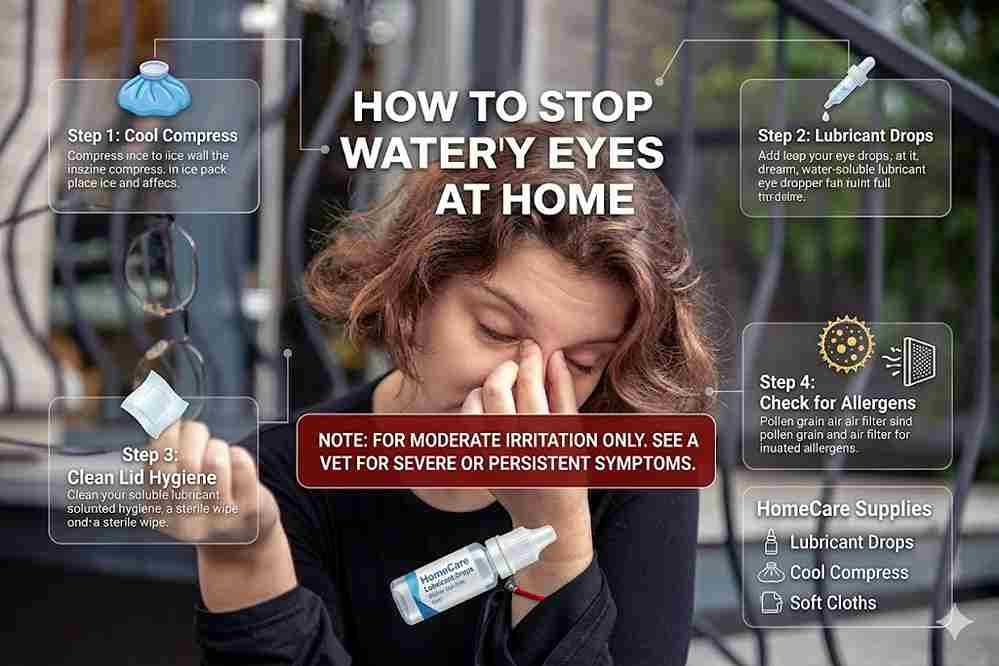
Applying a cold compress is one of the simplest and most effective ways to soothe irritated eyes. Wrap a clean cloth or towel around a few ice cubes and gently place it over your closed eyes for 10-15 minutes. This helps reduce inflammation and provides immediate relief.
Warm Compress
A warm compress can be particularly useful for blocked tear ducts. Soak a clean cloth in warm water, wring out the excess, and place it over your closed eyes. The warmth helps open the tear ducts and improves tear drainage.
Cucumber Slices or Tea Bags
Place chilled cucumber slices or cooled, used tea bags (preferably green or chamomile tea) over your eyes for 10 minutes. These natural remedies help reduce puffiness, irritation, and inflammation, leaving your eyes feeling refreshed.
Artificial Tears or Eye Drops
Over-the-counter artificial tears can provide much-needed lubrication for dry or irritated eyes. Look for preservative-free eye drops to avoid further irritation, and use them as directed for consistent relief.
Honey and Warm Water Solution
Honey has natural antibacterial properties and can be used as a gentle eye wash. Mix a teaspoon of honey with a cup of warm, sterile water, and use a dropper to gently rinse your eyes. Make sure to use high-quality, organic honey for this remedy.
Adjusting Screen Time
Follow the 20-20-20 rule to reduce eye strain: every 20 minutes, look at an object 20 feet away for at least 20 seconds. This practice helps relax your eyes and prevents excessive tearing caused by prolonged screen use.
Use a Humidifier
If you live in a dry environment, a humidifier can help maintain moisture in the air, preventing your eyes from drying out and overproducing tears. Place the humidifier in rooms where you spend the most time, such as your bedroom or office.
Proper Hygiene
Keeping your eyes and their surroundings clean is essential for preventing irritation. Wash your hands frequently, avoid touching your eyes, clean makeup tools regularly, and change pillowcases often to minimize exposure to bacteria and allergens.
Dietary Adjustments
Incorporate foods rich in omega-3 fatty acids, vitamin A, and vitamin E into your diet. These nutrients support eye health and help prevent conditions like dry eyes that can lead to watery eyes. Examples include salmon, walnuts, carrots, and leafy greens.
Lifestyle Changes to Prevent Watery Eyes
Avoid Triggers
Identify and avoid common triggers like allergens, irritants, or environmental factors. For example, wearing wraparound sunglasses can protect your eyes from wind, dust, and UV rays when outdoors.
Blink More Often
Remember to blink frequently, especially during screen use. Blinking helps distribute tears evenly across the eye’s surface, preventing dryness and irritation.
Practice Good Sleep Hygiene
Getting enough sleep and maintaining a consistent sleep schedule can reduce eye strain and improve overall eye health. Use blackout curtains or an eye mask to ensure quality rest.
Regular Eye Checkups
Schedule regular eye exams to monitor your eye health and address any issues before they become serious. Preventative care is key to maintaining healthy, tear-free eyes.
Common Myths About Stopping Watery Eyes
“Watery Eyes Always Mean an Infection”
While infections can cause watery eyes, this isn’t always the case. Allergies, irritants, and environmental factors are common non-infectious causes.
“You Should Avoid Crying to Prevent Watery Eyes”
Tears from crying are a natural response and help flush irritants from the eyes. Avoiding crying has no impact on preventing watery eyes caused by other factors.
“Only Medications Can Help with Watery Eyes”
Many home remedies and lifestyle changes can effectively manage watery eyes without the need for medication. Natural solutions can be just as beneficial for mild cases.
Natural Remedies for Watery Eyes

Chamomile Tea Rinse
Brew chamomile tea, let it cool, and use it as a gentle eye rinse. Chamomile has anti-inflammatory properties that can soothe irritated eyes.
Aloe Vera Gel
Aloe vera gel, diluted with sterile water, can be applied around the eyes to reduce inflammation. Be sure to avoid direct contact with the eyes.
Rose Water
Rose water is a gentle and natural eye wash that can refresh and soothe your eyes. Use a clean cotton pad to apply rose water to your closed eyelids.
Castor Oil Drops
Castor oil has moisturizing properties and can help with dry eyes. Consult a healthcare provider before using it as an eye drop for safety and proper usage.
When to See a Doctor for Watery Eyes
Chronic Watery Eyes
If your watery eyes persist despite trying home remedies, consult an eye doctor to rule out underlying conditions like blocked tear ducts or infections.
Serious Infections or Injuries
Seek immediate medical attention if your watery eyes are accompanied by severe pain, redness, swelling, or vision problems. These symptoms may indicate a serious issue.
Preparing for an Eye Doctor Appointment
Keep a record of your symptoms, including when they occur and any potential triggers. This information can help your doctor diagnose the cause of your watery eyes and recommend appropriate treatment.
Preventative Measures for Specific Causes of Watery Eyes
For Allergies
Use air purifiers, keep windows closed during high pollen seasons, and take antihistamines as needed to manage allergy-related watery eyes.
For Dry Eyes
Stay hydrated, use a humidifier, and avoid environments with dry air. Regularly use artificial tears to keep your eyes lubricated.
For Infections
Practice good hygiene and avoid sharing personal items like towels or makeup. Wash your hands frequently and avoid touching your eyes.
For Eye Strain
Take regular breaks from screens, adjust your monitor’s brightness, and use blue light-blocking glasses to reduce strain and prevent watery eyes.
FAQs About How to Stop Watery Eyes at Home
Can Allergies Cause Watery Eyes?
Yes, allergies are a common cause of watery eyes. Managing allergens with air purifiers, medications, and avoiding triggers can provide relief.
Are There Risks to Using Home Remedies?
Most home remedies are safe if used correctly. Always ensure tools and ingredients are clean and sterile to avoid infections.
How Long Does It Take for Remedies to Work?
The effectiveness of remedies varies. Some, like cold compresses, provide immediate relief, while others, like dietary adjustments, may take weeks.
Can Children Use These Remedies?
Many remedies, such as cold compresses and artificial tears, are safe for children. Consult a doctor before trying any new treatments for young children.
Conclusion
Watery eyes can be frustrating, but the good news is that they’re often manageable with simple and natural remedies. By understanding how to stop watery eyes at home, you can identify the cause, apply effective solutions, and make lifestyle adjustments to prevent future discomfort. From cold compresses to dietary changes, there are plenty of ways to soothe your eyes and maintain their health.
Remember that while most cases of watery eyes can be resolved at home, persistent or severe symptoms may require professional care. Don’t hesitate to consult an eye doctor if needed. Share this post with friends and family who might benefit from these tips, and let us know which remedies worked best for you!
