

Introduction
Have you ever wondered how to safely remove dipped nails at home without damaging your natural nails? Dipped nails are a popular manicure choice because they combine the durability of acrylics with the glossy finish of gel polish. They’re long-lasting, chip-resistant, and come in a variety of colors and designs. However, the challenge comes when it’s time to remove them. Improper removal can weaken and damage your nails, leaving them brittle and unhealthy.
Learning how to remove dipped nails at home is not only cost-effective but also a convenient way to maintain the health of your nails. By following safe and effective methods, you can avoid trips to the salon and ensure your nails stay in great shape. This article provides a comprehensive guide, including step-by-step techniques, tools needed, and aftercare tips to help you remove dipped nails at home like a pro.
Understanding Dipped Nails
What Are Dipped Nails?
Dipped nails, also known as dip powder nails, are created using a pigmented powder and adhesive layers. This manicure technique involves applying a base coat, dipping the nails into colored powder, and sealing it with an activator and topcoat. The result is a durable, long-lasting manicure that can stay chip-free for up to four weeks. Dipped nails have become a favorite among nail enthusiasts due to their smooth finish and vibrant color options.
How Dipped Nails Are Applied
The process of applying dipped nails involves multiple steps, which contribute to their durability. First, a base coat is applied to the nails. Then, the nails are dipped into a fine powder, which adheres to the base coat. This step is repeated until the desired thickness is achieved. An activator is then applied to harden the powder, followed by a glossy topcoat for a polished finish. This layering process creates a strong bond, making dipped nails more resistant to chipping and cracking than traditional nail polish.
Why Removing Dipped Nails Safely is Important
Improper removal of dipped nails can lead to serious nail damage. Peeling or scraping off the dip powder may weaken your natural nails and cause them to become thin and brittle. Additionally, harsh removal methods can irritate the nail bed and surrounding skin. To maintain healthy nails, it’s essential to follow a safe and gentle removal process that minimizes damage.
Tools and Materials You’ll Need
Essential Tools for Removing Dipped Nails
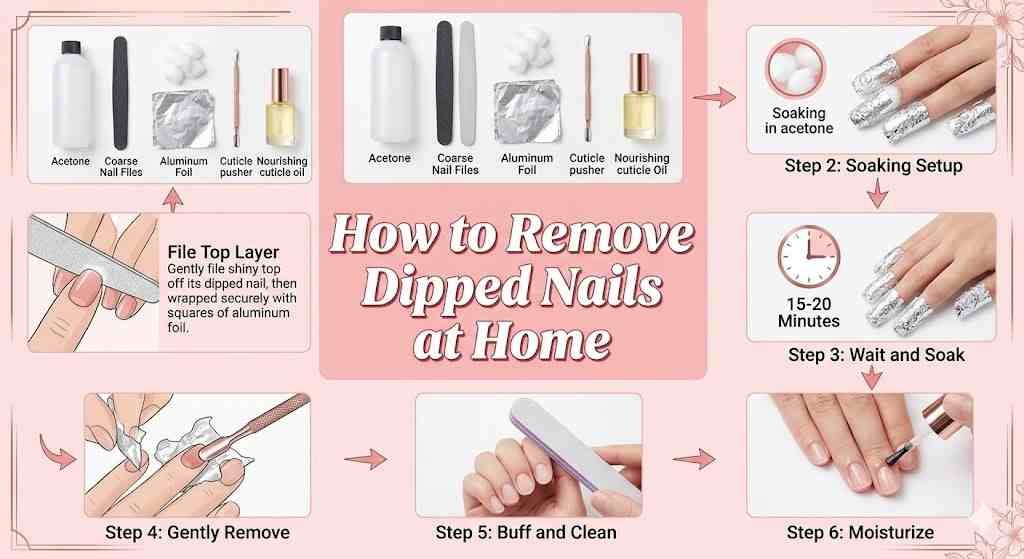
To remove dipped nails at home, you’ll need the following tools and materials:
- Acetone: Pure acetone is the most effective solution for breaking down dip powder.
- Nail file or buffer: These are used to remove the topcoat and allow acetone to penetrate the dip powder.
- Foil wraps or cotton balls: These are used to soak the nails in acetone.
- Cuticle pusher or orangewood stick: These tools help gently scrape off the softened powder.
- Bowl: Optional, but useful for soaking nails in acetone.
- Small towel: Protects your workspace from acetone spills.
- Nail clippers: Useful for trimming nails before removal.
Additional Items to Enhance the Process
For a smoother experience, you may also want:
- Petroleum jelly or cuticle oil: To protect the skin around your nails from acetone’s drying effects.
- Gloves: To minimize acetone exposure to your skin.
- Moisturizing lotion: To restore hydration to your hands and nails after the removal process.
Prepping Your Workspace
Choose a well-ventilated area to avoid inhaling strong acetone fumes. Cover your workspace with a towel or disposable cover to protect it from spills. Make sure all your tools and materials are within easy reach before starting.
Step-by-Step Guide: How to Remove Dipped Nails at Home
Method 1: Using Acetone and Foil Wraps
Step 1: File and Buff the Topcoat
Use a nail file to gently buff off the shiny topcoat of your dipped nails. This step is crucial because it allows the acetone to penetrate the dip powder more effectively.
Step 2: Prepare Your Acetone Wraps
Soak cotton balls in pure acetone. Place a soaked cotton ball on each nail and wrap it tightly with aluminum foil. For convenience, you can also use pre-made acetone wraps if you have them.
Step 3: Let the Acetone Work
Leave the wraps on for 15-20 minutes. During this time, the acetone will break down the dip powder, making it easier to remove.
Step 4: Check and Remove the Dip Powder
After 15-20 minutes, remove the foil wraps and gently push off the softened dip powder using a cuticle pusher or orangewood stick. If the powder doesn’t come off easily, reapply acetone and wait an additional 5-10 minutes.
Step 5: Clean and Buff
Once all the dip powder is removed, use a buffer to smooth out any residue. Wash your hands thoroughly to remove any acetone left on your skin.
Method 2: Soaking in Acetone
Step 1: Prepare the Acetone Bowl
Pour acetone into a small bowl and place it inside a larger bowl of warm water to gently heat the acetone (do not microwave the acetone).
Step 2: Protect Your Skin
Apply petroleum jelly or cuticle oil around your nails to protect your skin from acetone’s drying effects.
Step 3: Soak Your Nails
Submerge your nails into the acetone for 15-20 minutes. Periodically check to see if the dip powder is softening.
Step 4: Remove the Residue
Use a cuticle pusher to gently scrape off the softened dip powder. If needed, repeat the soaking process for stubborn areas.
Step 5: Rinse and Buff
Wash your hands thoroughly and use a buffer to remove any remaining powder.
Method 3: Using Acetone-Free Options (For Sensitive Skin)

Step 1: Alternative Products
Acetone-free nail polish removers or dip powder removal kits are available for those with sensitive skin. These products generally take longer but are less harsh.
Step 2: Steps for Acetone-Free Removal
Buff the topcoat, apply the acetone-free remover, and let it sit for 20-30 minutes. Gently scrape off the softened dip powder and repeat as needed.
Common Mistakes to Avoid
- Peeling or picking at the dip powder, which can damage your nail bed.
- Rushing the process; allow the acetone enough time to work.
- Skipping the buffing step, which is essential for effective acetone penetration.
- Using sharp tools that can harm the nail bed.
- Neglecting to protect your skin from acetone’s drying effects.
Aftercare for Your Nails
Rehydrating Your Nails and Skin
After removing dipped nails, apply cuticle oil and moisturizing lotion to rehydrate your nails and skin. Massage the oil into your cuticles to promote healthy nail growth.
Strengthening Weak Nails
Use a nail strengthener or hardener to support weak nails. Take a break from nail enhancements to let your natural nails recover.
Healthy Nail Care Routine
File and shape your nails gently, keep them trimmed, and maintain hydration by regularly applying hand creams and oils.
Comparing At-Home Removal vs. Professional Removal
At-home removal is cost-effective, convenient, and can be done whenever you like. However, professional removal offers expertise, access to advanced tools, and reduces the risk of nail damage. If your nails are severely weakened or the dip powder layers are thick, it’s best to seek professional help.
Frequently Asked Questions
Q: Can I remove dipped nails without acetone?
Yes, acetone-free removers are available, but they take longer and may not be as effective.
Q: How do I prevent nail damage during removal?
Be patient, avoid harsh tools, and follow proper aftercare.
Q: Is acetone safe for regular use?
Yes, but it can dry out your nails and skin. Always moisturize after using acetone.
Conclusion
Removing dipped nails at home doesn’t have to be a daunting task. By following these safe and effective methods, you can protect your natural nails and keep them healthy. Remember, patience is key, and proper aftercare is essential for maintaining strong, beautiful nails. Now that you know how to remove dipped nails at home, give it a try and enjoy salon-quality results from the comfort of your home!
